The 50% capital gains discount is changing. See what it means for your next sale.
Built by Search Property. 1,700+ Australians helped. Last reviewed: .
From 1 July 2027, the 50% CGT discount is replaced by CPI indexation and a 30% minimum tax. Model your sale under both rules in seconds.
1 July 2027
New CGT rules commence. Only gains accruing from this date are affected.
CPI indexation replaces the 50% discount
Cost base is uplifted by inflation. Only the real gain is taxed.
30% minimum tax
A floor rate applies to real gains accruing after 1 July 2027.
Negative gearing limited to new builds
Properties held before 12 May 2026 are grandfathered.
$250 WATO + $1,000 instant deduction
New $250 Working Australians Tax Offset from FY 2027‑28 and $1,000 instant work-related deduction from FY 2026‑27. Sit on top of the previously legislated bracket cuts.
Capital gains tax calculator
The transitional rule splits your gain at 1 July 2027 using the ATO's apportionment formula. Taxpayers can either seek a valuation of the asset as at 1 July 2027... or use a specified apportionment formula that estimates the asset's value on 1 July 2027, based on its growth rate over the asset's holding period. The ATO will provide tools to estimate this value for taxpayers. Treasury · Negative Gearing and Capital Gains Tax Reform, p.4
Michael owns an investment property purchased before 12 May 2026 that is negatively geared. He can continue to negatively gear this property in future years by using losses from his investment property against other income. Michael sells the property two years after the policy commences for $560,000. Michael still receives the 50 per cent CGT discount for the capital gain he makes on the property between the purchase date and 1 July 2027. He uses ATO tools to determine its value on that date was $500,000. After adjusting for two years of inflation of 2.5 per cent, his taxable capital gain for the period after 1 July 2027 is $34,688, slightly more than if he had applied a 50 per cent discount (which would have resulted in a taxable capital gain of $30,000). Assuming a 47 per cent tax rate, the tax on his gain since 1 July 2027 is $16,303 (instead of $14,100 with a 50 per cent discount). Michael does not pay any tax on the capital gain until he sells his property.
Treasury · Negative Gearing and Capital Gains Tax Reform - cameosYoonseo earns an income of $100,000 and buys an existing residential investment property for $519,000 (including stamp duty) after the policy start date, rents it out and sells it ten years later for $814,447. Over the first five years that she owns the property she has net rental losses and accumulates $22,879 of carry forward losses. In the following five years, Yoonseo applies most of these carried forward losses to reduce her positive net rent over this period from $18,079 to zero. In the year she sells the property she uses the remaining carried forward losses to reduce her real estate capital gain from $150,083 to $145,284. Overall, she pays $186 more in nominal tax over the years of her investment compared to previous settings. Had Yoonseo bought a new build property, she would not pay additional tax as negative gearing and the existing capital gains tax discount would still be available for this property.
Treasury · Negative Gearing and Capital Gains Tax Reform - cameosZoe purchases shares in a company for $100 on 1 July 2027. She then sells her shares on 1 July 2032 for $125, having made a nominal gain from this investment of $25, with an investment return of 4.6 per cent per year. As the shares were purchased after 1 July 2027, Zoe's capital gains are subject to cost base indexation. Inflation is 2.5 per cent each year Zoe holds the assets and, using ATO tools, Zoe can work out that the indexed cost base of the shares is $113. Zoe's taxable capital gain is reduced from $25 to $12 under cost base indexation. This is slightly less than the taxable capital gain of about $13 under the 50 per cent discount, meaning she will pay slightly less tax.
Treasury · Negative Gearing and Capital Gains Tax Reform - cameosJane purchases an asset on 1 July 2022 for $800,000. She sells the asset on 1 July 2032 for $1,600,000 earning a 7.2 per cent annual return. Using ATO tools, Jane determines that the asset was worth $1,131,371 at commencement of the policy (1 July 2027). Under the transitional rules, Jane calculates her taxable capital gain by adding: taxable capital gains of $165,685 earned before commencement, which is equal to gross capital gains of $331,371 with the 50 per cent CGT discount; plus taxable gains of $319,958 earned after commencement, which is equal to the gain of $468,629 less cost base indexation. Her total taxable capital gain is $485,643. This is more than the $400,000 that would have been calculated if a 50 per cent discount applied to the gain overall. Assuming a 47 per cent tax rate, the tax on her gain is $228,252 (compared to $188,000 with a 50 per cent discount).
Treasury · Negative Gearing and Capital Gains Tax Reform - cameosDavid earns an annual rate of return of 5 per cent, similar to longer term returns on residential real estate. Assuming 2.5 per cent inflation, an asset purchased for $500,000 in July 2027, a holding period of 10 years, and $100,000 in other income per year, he will have a taxable capital gain of $174,405 under cost base indexation compared to $157,224 under the current 50 per cent discount. He will pay an extra $8,075 in tax due to the reforms.
Treasury · Negative Gearing and Capital Gains Tax Reform - cameosBen earns a lower 2.5 per cent annual return. Assuming 2.5 per cent inflation, an asset purchased for $500,000 in July 2027, a holding period of 10 years, and $100,000 in other income per year, as Ben does not earn a positive return on his investment after inflation, he will not have a taxable capital gain under cost base indexation. Under the 50 per cent discount his taxable capital gain would have been $70,021. He will pay $24,858 less in tax due to the reforms.
Treasury · Negative Gearing and Capital Gains Tax Reform - cameosKate earns a higher 7.5 per cent annual return. Assuming 2.5 per cent inflation, an asset purchased for $500,000 in July 2027, a holding period of 10 years, and $100,000 in other income per year, she will have a taxable capital gain of $390,474 under cost base indexation compared to $265,258 under the current 50 per cent discount. She will pay an extra $58,851 in tax due to the reforms.
Treasury · Negative Gearing and Capital Gains Tax Reform - cameosJack has a taxable income before capital gains of $25,000 in 2029-30 and realises a capital gain of $10,000 on an asset that he purchased in 2027-28. Jack does not receive an income support payment so is not exempt from the minimum tax. The tax on Jack's capital gain of $10,000 is $1,400, or a tax rate of 14 per cent (excluding the Medicare levy). As this is lower than 30 per cent, Jack pays an additional $1,600 in tax to bring the tax rate on his capital gain up to 30 per cent. Jack may have tax offsets available to reduce the minimum tax and would be exempt from the minimum tax if he received an income support payment in that year.
Treasury · Negative Gearing and Capital Gains Tax Reform - cameosSalary plus other taxable income. If you file as a couple, enter your individual income (CGT is assessed per individual).
FY 2027-28 · $190,001+
47% marginal rate applied The Government will deliver new tax cuts for every working Australian taxpayer by introducing a $250 Working Australians Tax Offset (WATO). Over 13 million Australian workers will benefit from the WATO for income earned from 1 July 2027. This is on top of the first round of tax cuts that were rolled out in 2024 and two further tax cuts already coming into effect over the next two years. Treasury · New tax cuts for Australian workers, p.1
Only the real gain above inflation is taxed under the new rules.
+$2,203.06
Under the new rules you'd pay $2,203.06 more in tax on this sale.
Proceeds after tax Total cash in your hand after CGT is paid: sale price (less selling costs) minus tax. Includes your original purchase money coming back, on top of the gain.
$533,311
Profit after tax $86,882 Just the after-tax gain: sale price minus your cost base minus tax. This is how much better off you are versus what you originally put in.
Proceeds after tax Total cash in your hand after CGT is paid: sale price (less selling costs) minus tax. Includes your original purchase money coming back, on top of the gain.
$531,108
Profit after tax $84,679 Just the after-tax gain: sale price minus your cost base minus tax. This is how much better off you are versus what you originally put in.
Taxable capital gains are added to your assessable income and taxed progressively across the brackets above. Larger gains can push portions into higher brackets, so the headline marginal rate reflects the highest bracket your stacked income touches.
FY 2027-28 · Marginal 47% · Inflation 2.5% · Holding 4.00 yrs
Negative gearing calculator: how the 2027 changes affect your deduction.
From 1 July 2027, losses on established residential properties bought after 12 May 2026 can't reduce wages. They carry forward against future property income only. From 1 July 2027, losses related to existing residential investment properties purchased from 7:30pm AEST 12 May 2026 will only be deductible against other income from residential properties, including capital gains. However, when an investor has excess losses, they will be able to carry forward that excess to offset residential property income in future years. Treasury · Negative Gearing and Capital Gains Tax Reform, p.1
Treasury cameo uses $14,810. Roughly a 3.1% yield with a 5.7% rate on a $1m property.
FY 2027-28 · $45,001 – $135,000 · 32% marginal
Deduction against your wages
$4,739
32% × $14,810
Deduction against your wages
$0
Carry forward $14,810 against future property income From 1 July 2027, losses related to existing residential investment properties purchased from 7:30pm AEST 12 May 2026 will only be deductible against other income from residential properties, including capital gains. However, when an investor has excess losses, they will be able to carry forward that excess to offset residential property income in future years. Treasury · Negative Gearing and Capital Gains Tax Reform, p.1
Bought as an established property from 1 July 2027. Losses are not deductible against wages. They carry forward to offset future residential property income, including any future capital gains. A new build avoids this restriction.
What's changing: CGT indexation, 30% minimum tax, and negative gearing.
Real gains, not nominal
The 50% CGT discount is replaced with cost-base indexation. Your purchase price is uplifted by CPI over the holding period, so only the gain above inflation is taxed. This is how CGT worked between 1985 and 1999.
Floor rate on real gains
A 30% minimum tax applies to real capital gains accruing from 1 July 2027. If your marginal rate is already 30% or higher this has no impact. Recipients of means-tested income support payments are exempt.
New builds only
Negative gearing is limited to new builds from 1 July 2027. Existing properties held at announcement (7:30pm AEST 12 May 2026) keep their current arrangements. Excess losses on established properties carry forward against future property income.
What's not changing
- Main residence. Fully exempt from CGT.
- SMSFs and superannuation funds. Unaffected.
- Widely-held trusts (e.g. most managed investment trusts).
- Small business CGT concessions. All four retained.
- Affordable housing 60% CGT discount. Fully retained.
How the transitional rule works
Assets owned before 1 July 2027 and sold after are split at the 1 July 2027 market value. The pre-2027 portion keeps the 50% discount; the post-2027 portion uses indexation plus the 30% minimum.
You can either obtain a formal valuation as at 1 July 2027 or use the ATO's apportionment formula, which back-calculates the value from your actual growth rate over the holding period.
Method This calculator uses the ATO apportionment formula.
What the experts are saying.
Coverage and analysis of the Budget 2026-27 CGT and negative gearing reforms from independent commentators.
Common questions.
If you're weighing whether to buy, sell or hold under the new rules, our advisors model your situation under both regimes.
Speak to a property investment advisor about the 2027 CGT changesWhat is actually changing?
From 1 July 2027 the 50% CGT discount for individuals, trusts and partnerships is replaced with cost-base indexation, and a 30% minimum tax applies to real capital gains. Negative gearing is limited to new builds from the same date.
When do the new rules start?
The CGT reforms apply to gains accruing from 1 July 2027. Sales before that date are taxed entirely under the current 50% discount. The negative gearing change also commences 1 July 2027.
Who is affected?
Australian individuals, trusts and partnerships that hold CGT assets outside super. Companies, SMSFs, superannuation funds and widely-held managed investment trusts are excluded from the CGT changes.
How does the transitional rule work?
For assets bought before and sold after 1 July 2027, you keep the 50% discount on the portion of the gain accrued before that date, and the new rules apply to gains after. The split point is the asset's market value at 1 July 2027. That can be valued formally or estimated via the ATO's apportionment formula.
What is the 30% minimum tax?
A floor rate of 30% on real gains accruing after 1 July 2027. If your marginal rate is already 30% or higher it has no effect. It mostly affects taxpayers who defer realising gains into low-income years. Recipients of means-tested income support payments are exempt.
New builds: what is different?
Investors who buy a new build can choose either the 50% CGT discount or indexation plus the 30% minimum at the time of sale, whichever is lower. New builds also retain access to negative gearing.
Is my main residence affected?
No. The main residence exemption from CGT continues unchanged.
Are super and SMSFs affected?
No. Superannuation funds, including SMSFs, are excluded from both the CGT and negative gearing changes.
Is this financial advice?
No. This calculator is general information only and does not consider your personal objectives, financial situation or needs. Always consult a registered tax adviser before making investment or tax decisions.
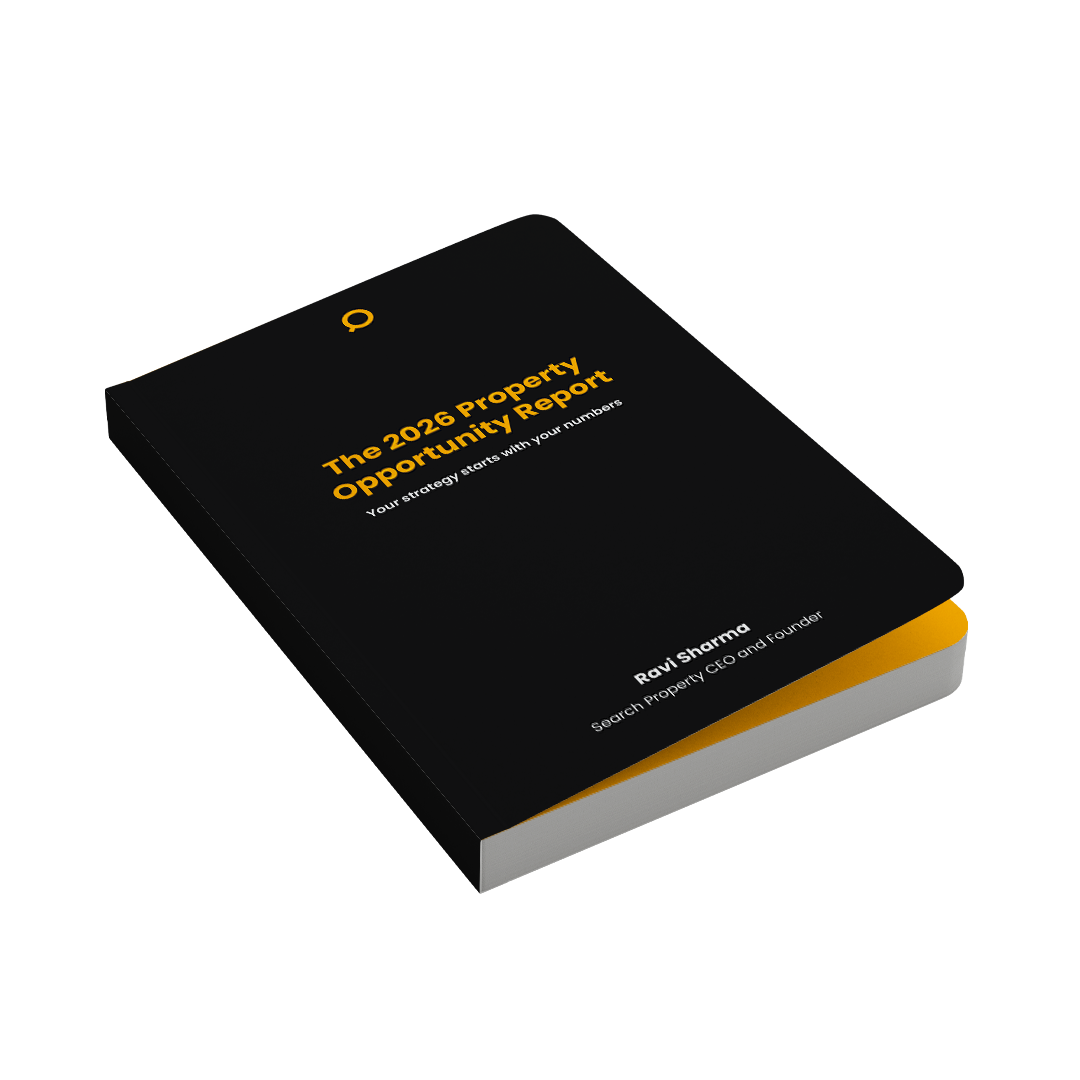
Get the 2026 Property Opportunity Report
9 Australian markets assessed. Ravi Sharma's framework for finding the suburbs worth buying in 2026, sent straight to your inbox.
The 2026 Property Opportunity Report
Where smart investors are actually buying in 2026. Ravi Sharma's framework for assessing 9 Australian markets, sent straight to your inbox.
- → 9 Australian markets assessed with real data
- → The 8-factor framework Search Property uses on every deal
- → Key principles for building a portfolio that funds your retirement
Buying an investment property under the new rules?
We've helped 1,700+ Australians buy investment property. Our advisors model how the 2027 reforms apply to your strategy across new builds, established properties and existing holdings.
Estimates only. General information; not financial, tax or legal advice. The calculator uses the ATO apportionment formula described in Treasury's Budget 2026‑27 paper "Negative Gearing and Capital Gains Tax Reform" to estimate the asset value at 1 July 2027, and applies the flat marginal tax rate of your selected income band (including the 2% Medicare levy). Marginal rates reflect the previously legislated cuts to the $18,201 to $45,000 bracket: 16% (FY 2025‑26) to 15% (FY 2026‑27) to 14% (FY 2027‑28 onwards). The new tax-cut measures announced in Budget 2026‑27 - the $250 Working Australians Tax Offset (FY 2027‑28+) and the $1,000 instant work-related deduction (FY 2026‑27+), per Treasury's "New tax cuts for Australian workers" paper - are not factored into the after-tax outcomes shown here. The calculator does not account for progressive rate stacking, the Low Income Tax Offset, the Working Australians Tax Offset, the $1,000 instant deduction, the Medicare levy surcharge, carry-forward capital losses, small business CGT concessions, main residence apportionment, depreciation recapture, company or trust structures, or individual circumstances. Final rules may differ from these papers. Always consult a registered tax adviser before making financial or investment decisions.